TEA MAKING · WUYI MOUNTAINS
Seven steps stand between the fresh leaf and the finished tea. Not every tea takes all seven — white tea rests through the first two and meets only the lightest fire at the end; the rock teas take them all. Each step is a decision, and most of them cannot be undone.
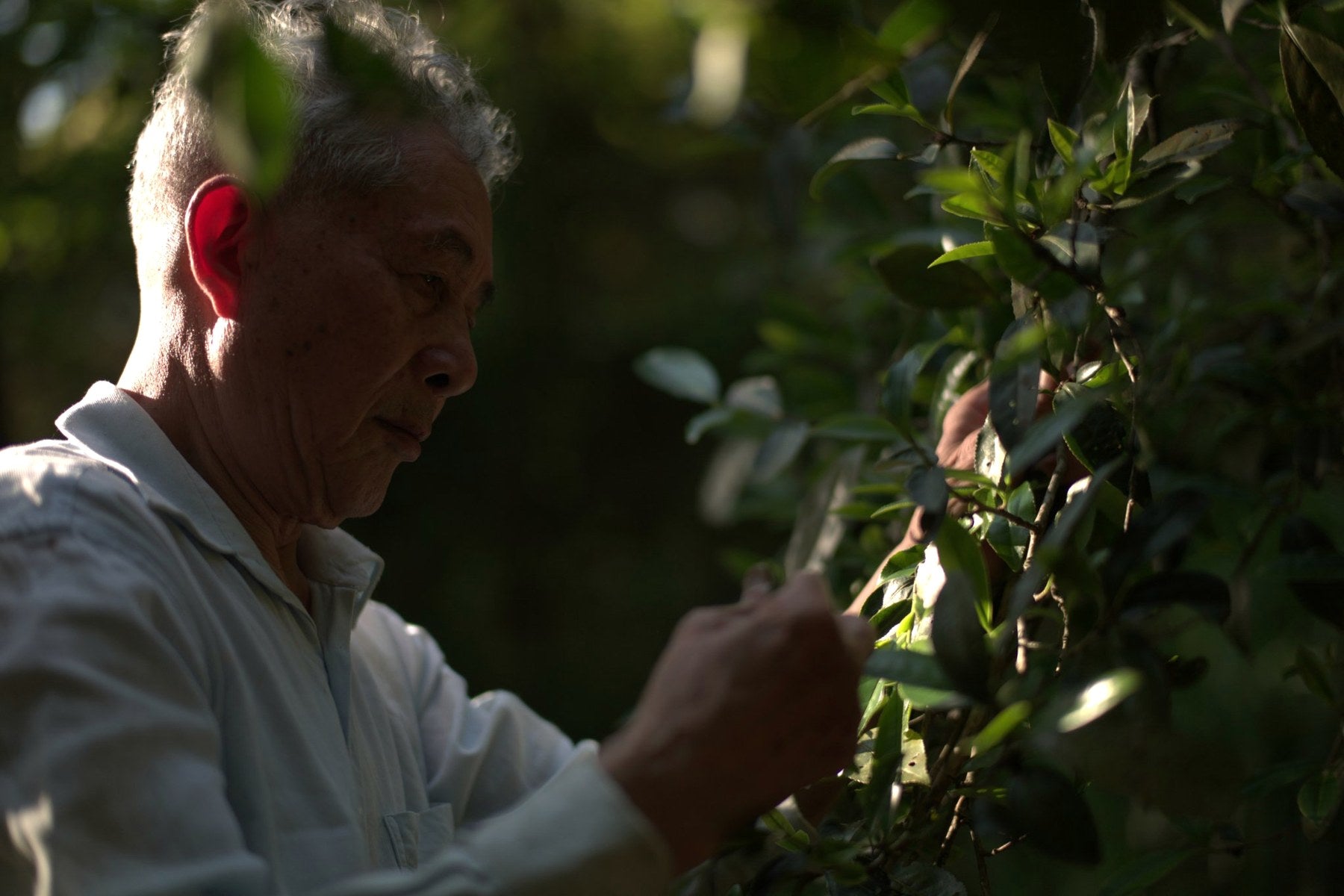
The hands at work in these pages belong to Wú Shuǐwàng — a tea maker of Shuiji Town in the Wuyi Mountains. He named PINYE for the pure spring that flows from deep in these mountains, and for the wild land it runs through.
THE THREE CORES OF TEA MAKING — HUMIDITY · TEMPERATURE · TIME
01 PICKED BY HAND · 02 WITHERING · 03 SHAKING TO AWAKEN THE AROMA · 04 FIXATION · 05 ROLLING · 06 CHARCOAL ROASTING · 07 RESTING
01
Picked by Hand
A kilo or two of finished tea in a whole day's picking.
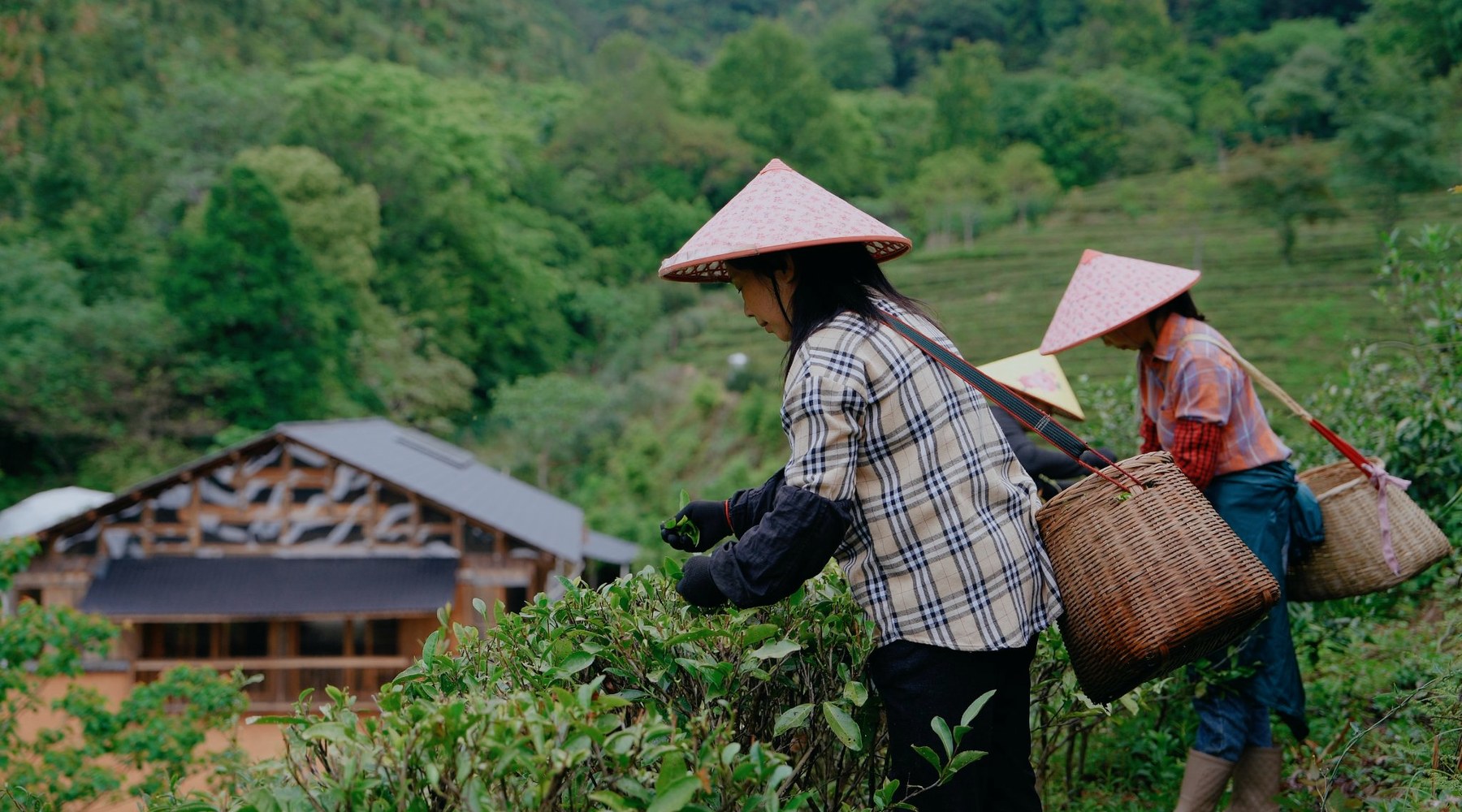
In spring, pickers walk the rows and take the new shoots one by one. For Silver Needle, only the unopened bud; for the rock teas, sturdier opened leaves that can withstand the fire to come. A skilled picker gathers barely a kilo or two of finished tea in a day. What the hand leaves on the bush matters as much as what it takes — a torn or crushed leaf begins to spoil before making even starts.
02
Withering
Nothing added, nothing forced — the leaf rests, and changes.
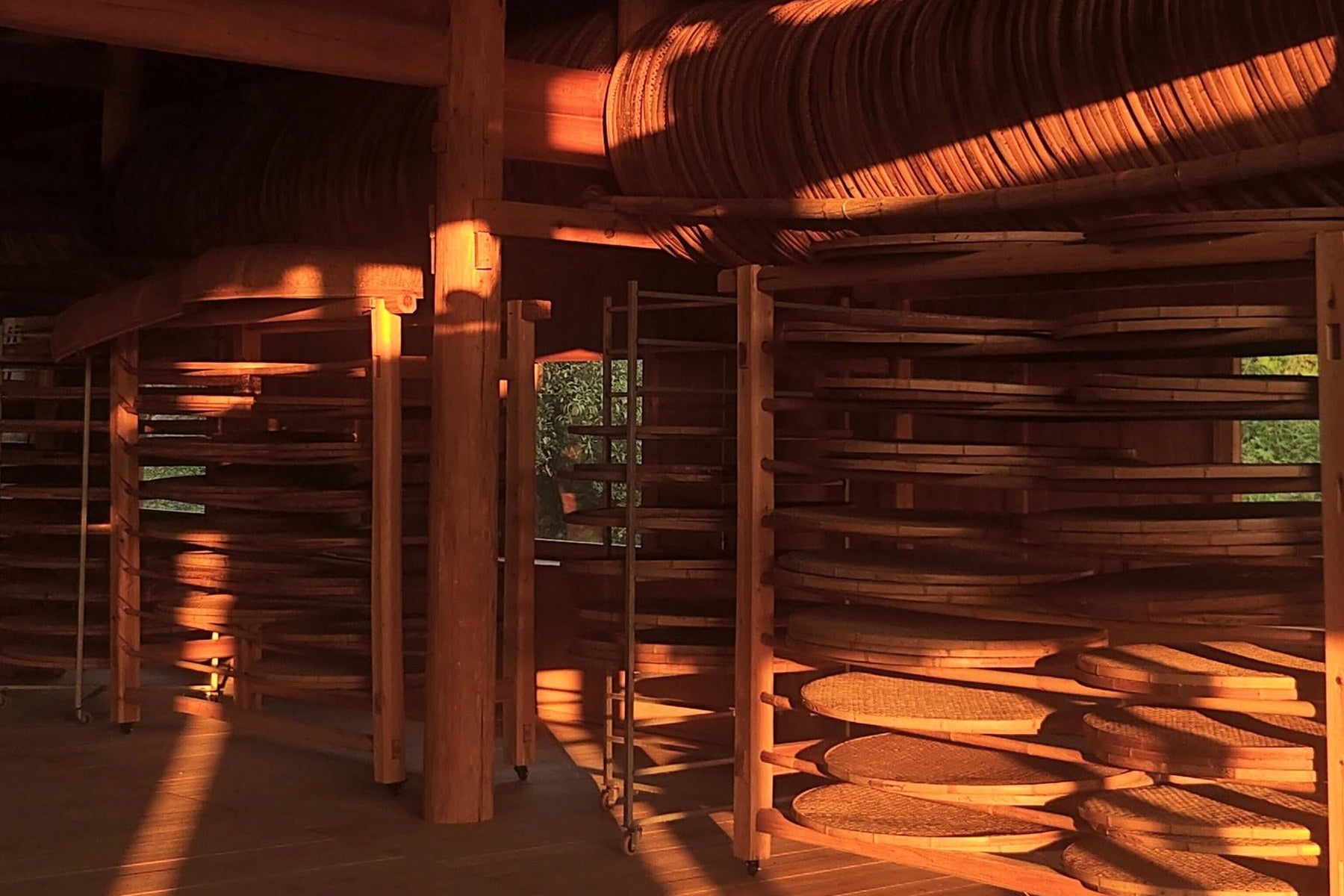
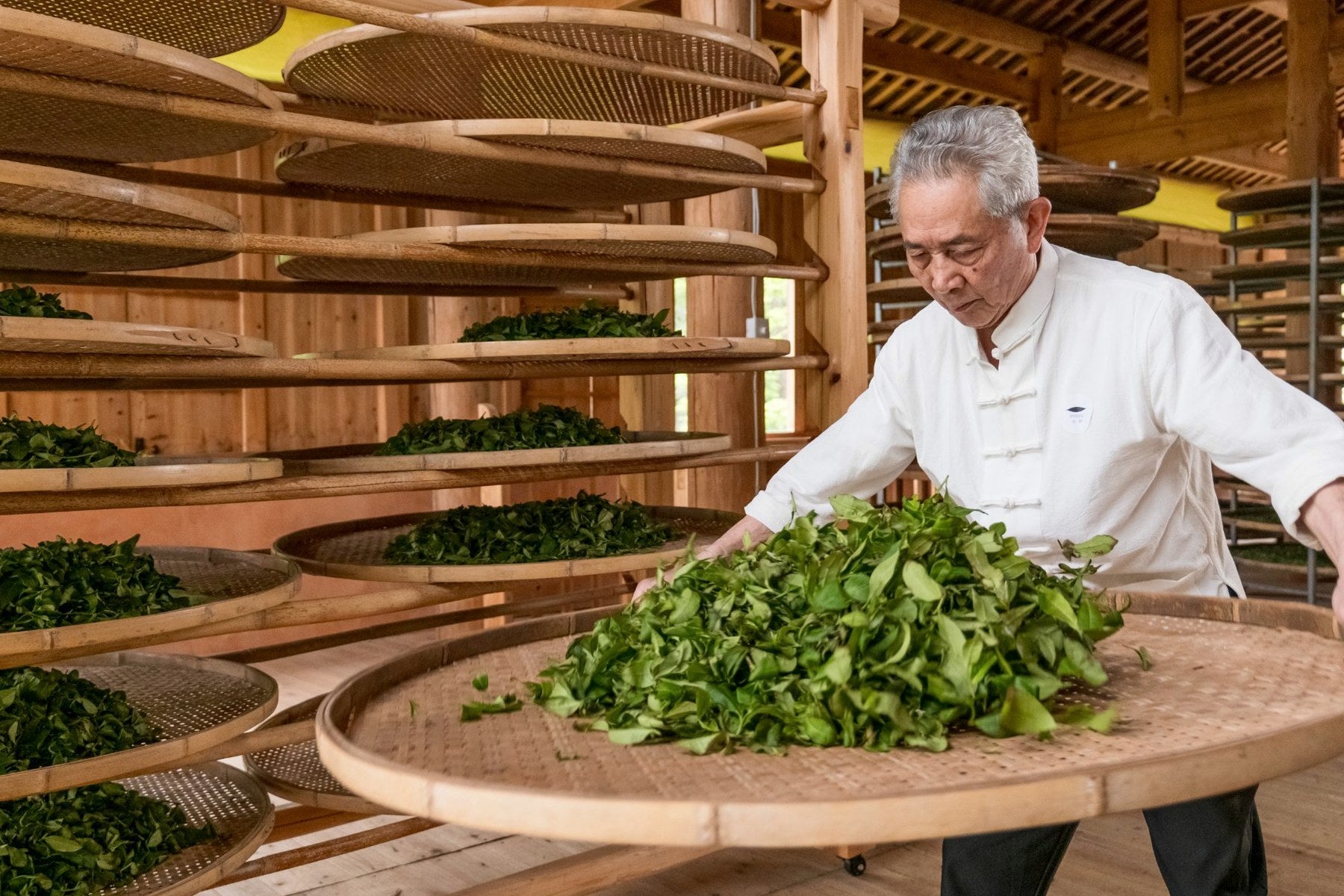
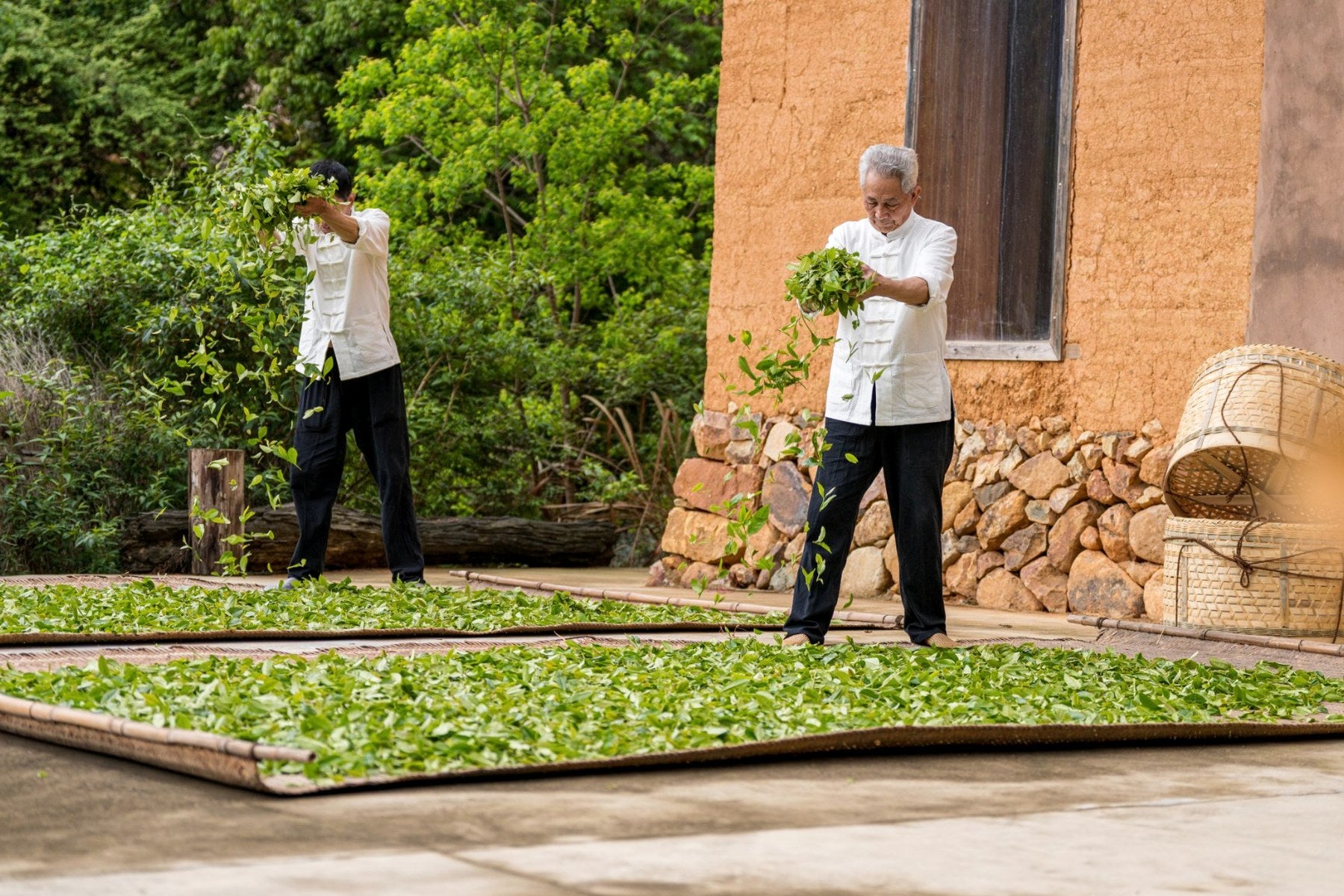
The fresh leaf is spread thin on woven bamboo trays and left to rest. It is still alive, and still changing. As it slowly gives up its moisture — a few hours for the oolongs, up to three days for white tea — the grassy sharpness fades and sweetness rises. Nothing is added and nothing is forced. The maker's work here is watching, turning, and waiting.
03
Shaking to Awaken the Aroma
Fragrance is not added. It is woken up.
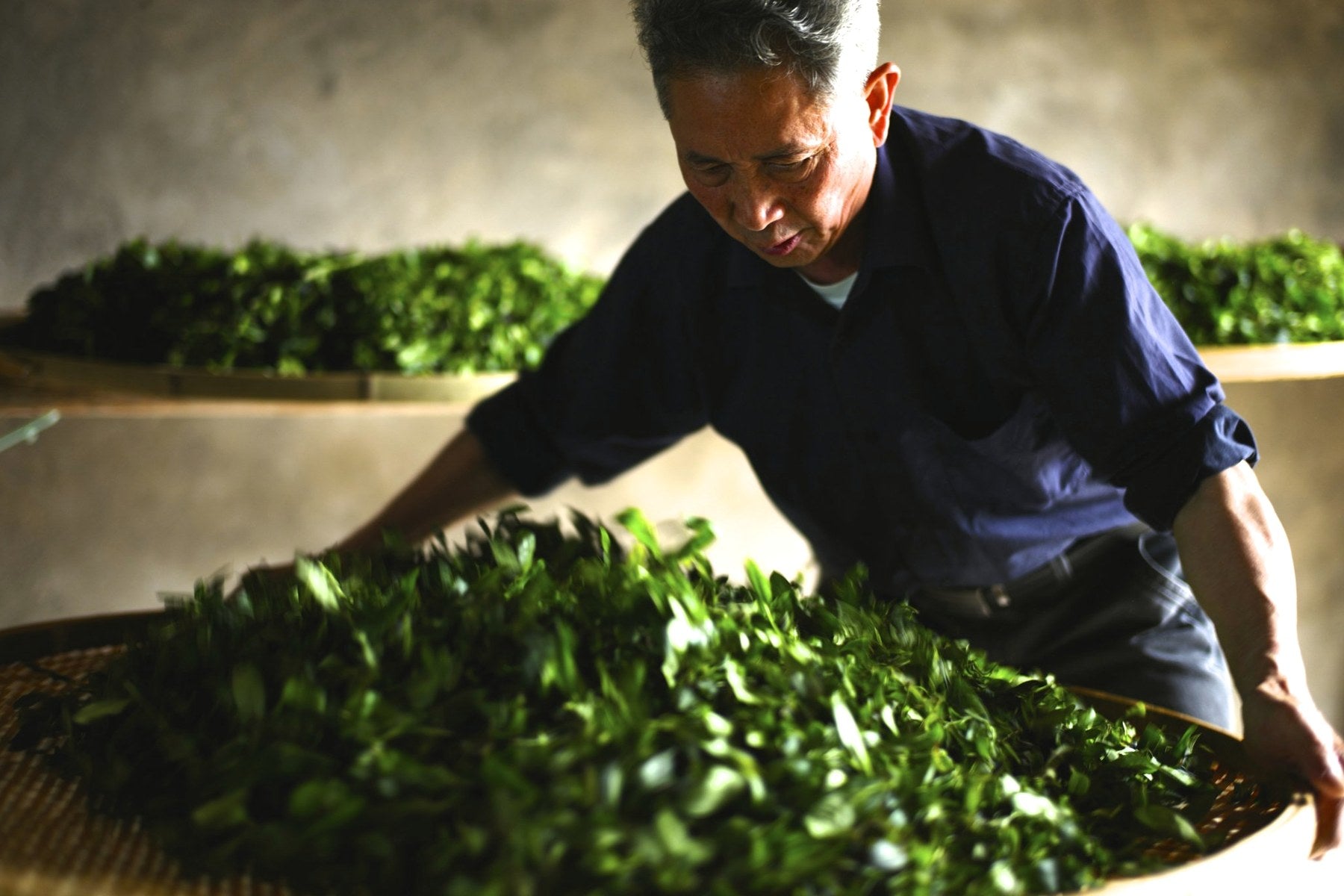
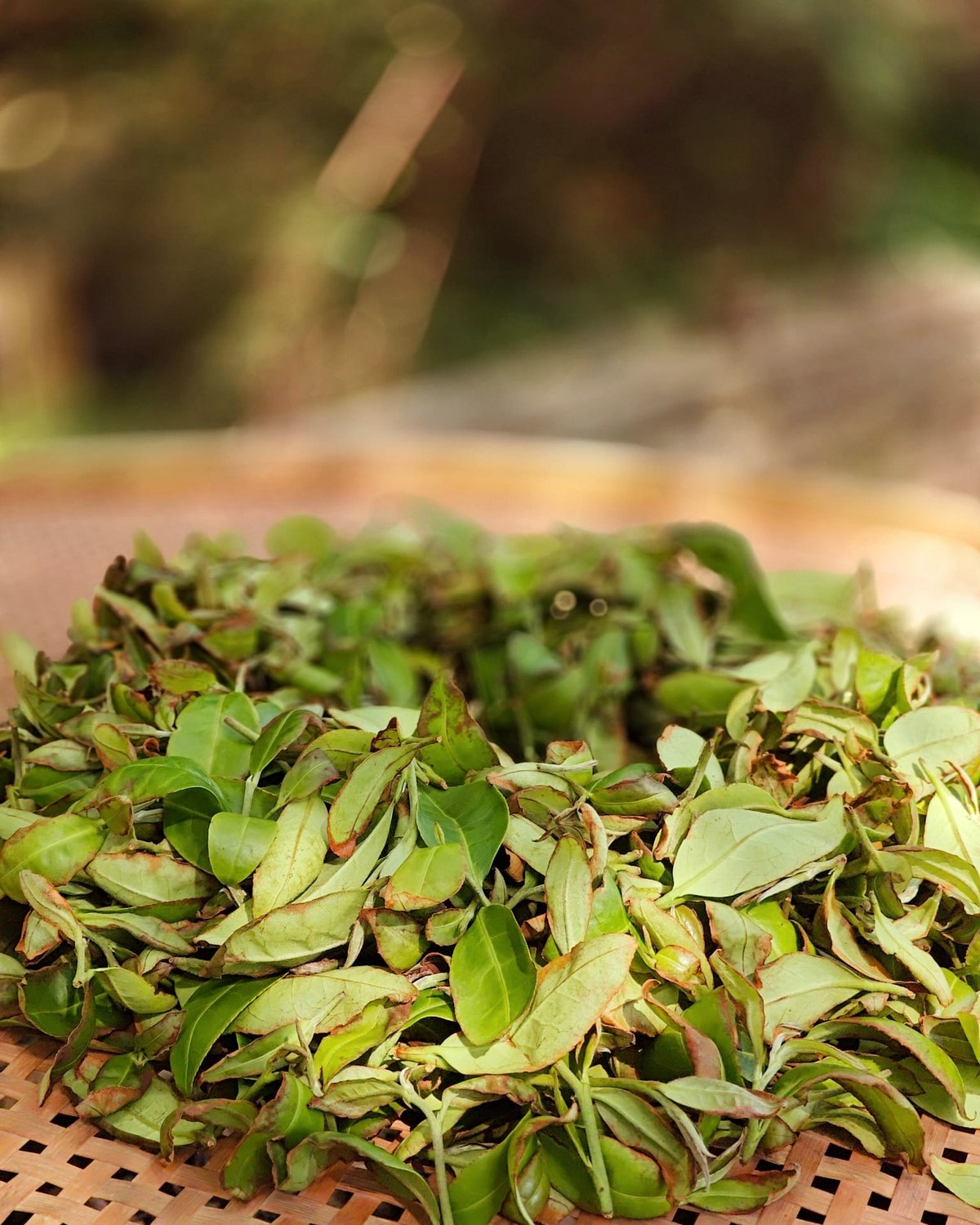
For the oolongs, the withered leaf is gently shaken in its tray, again and again, with long rests in between. Each shake bruises the leaf's edges, and where the edge is bruised, the juices meet the air and oxidation begins. This is where an oolong's fragrance is born — not added later, but woken up.
04
Fixation
The moment the maker chooses is the moment the tea becomes itself.
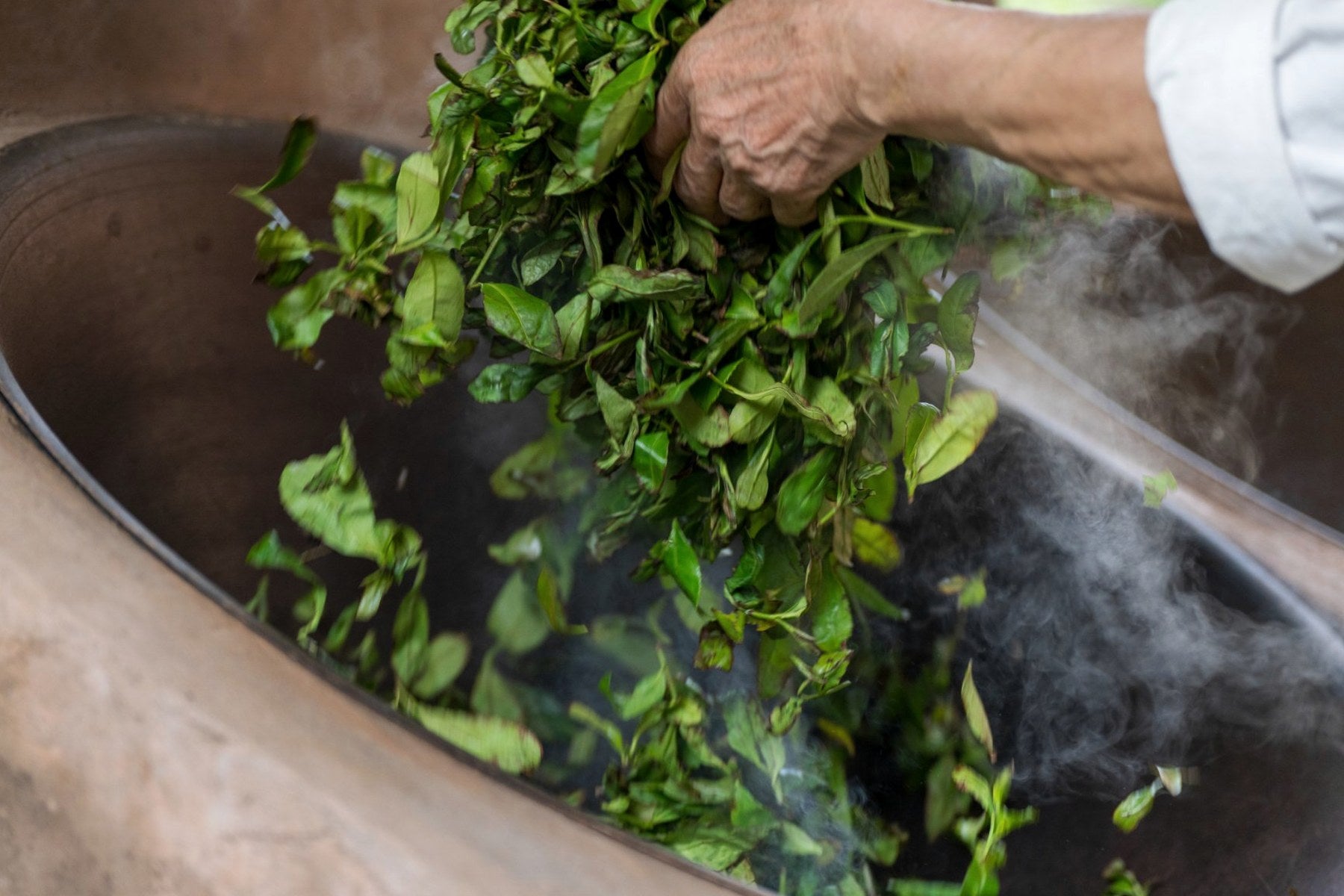
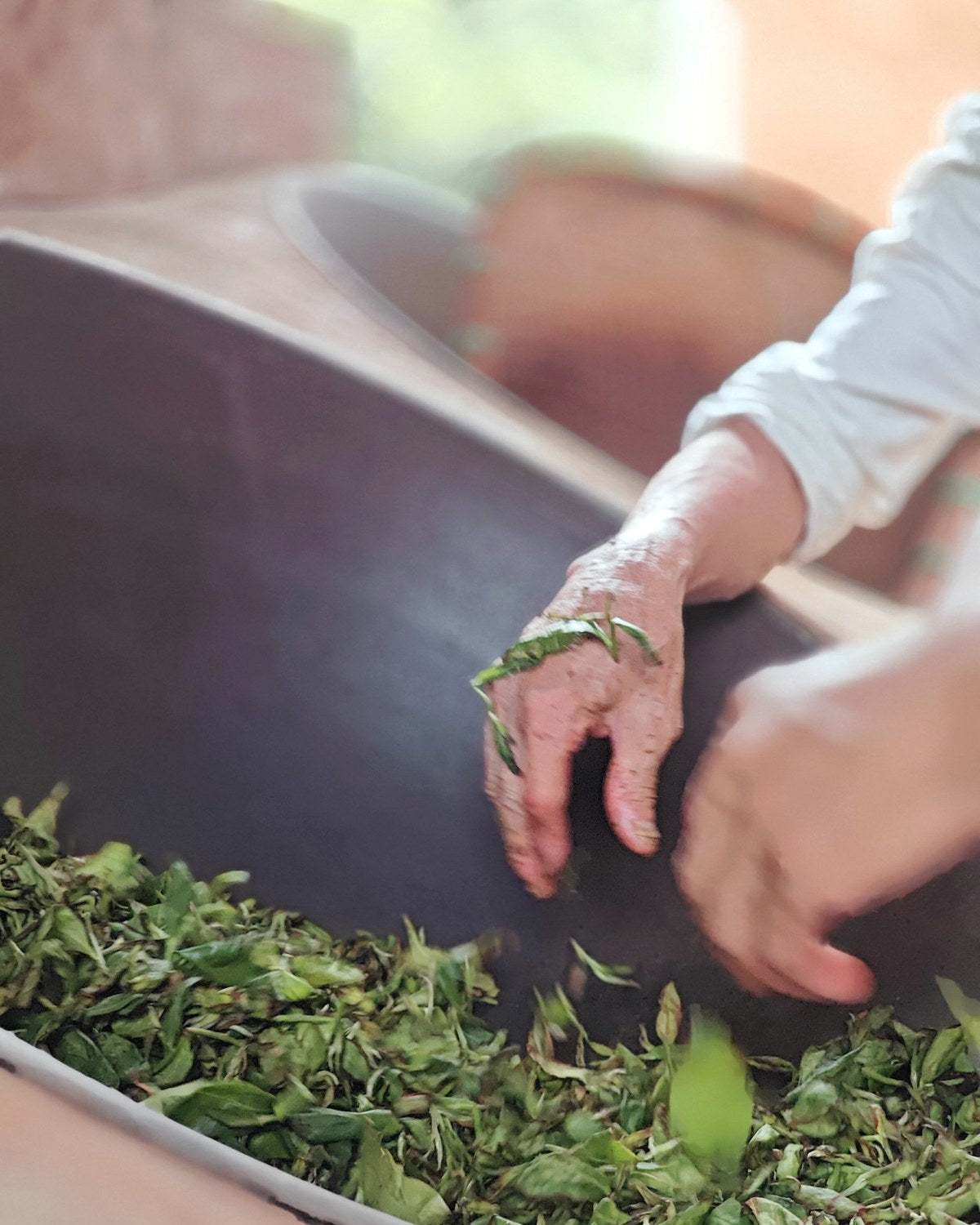
Heat, briefly and decisively. When the maker judges that the leaf has changed enough, it meets the hot pan and the change stops. A moment too early and the tea stays raw and green; too late and the fragrance is lost. Fixation is the step that fixes a tea's character. Everything after it is refinement.
05
Rolling
Rolling does the first work of release.
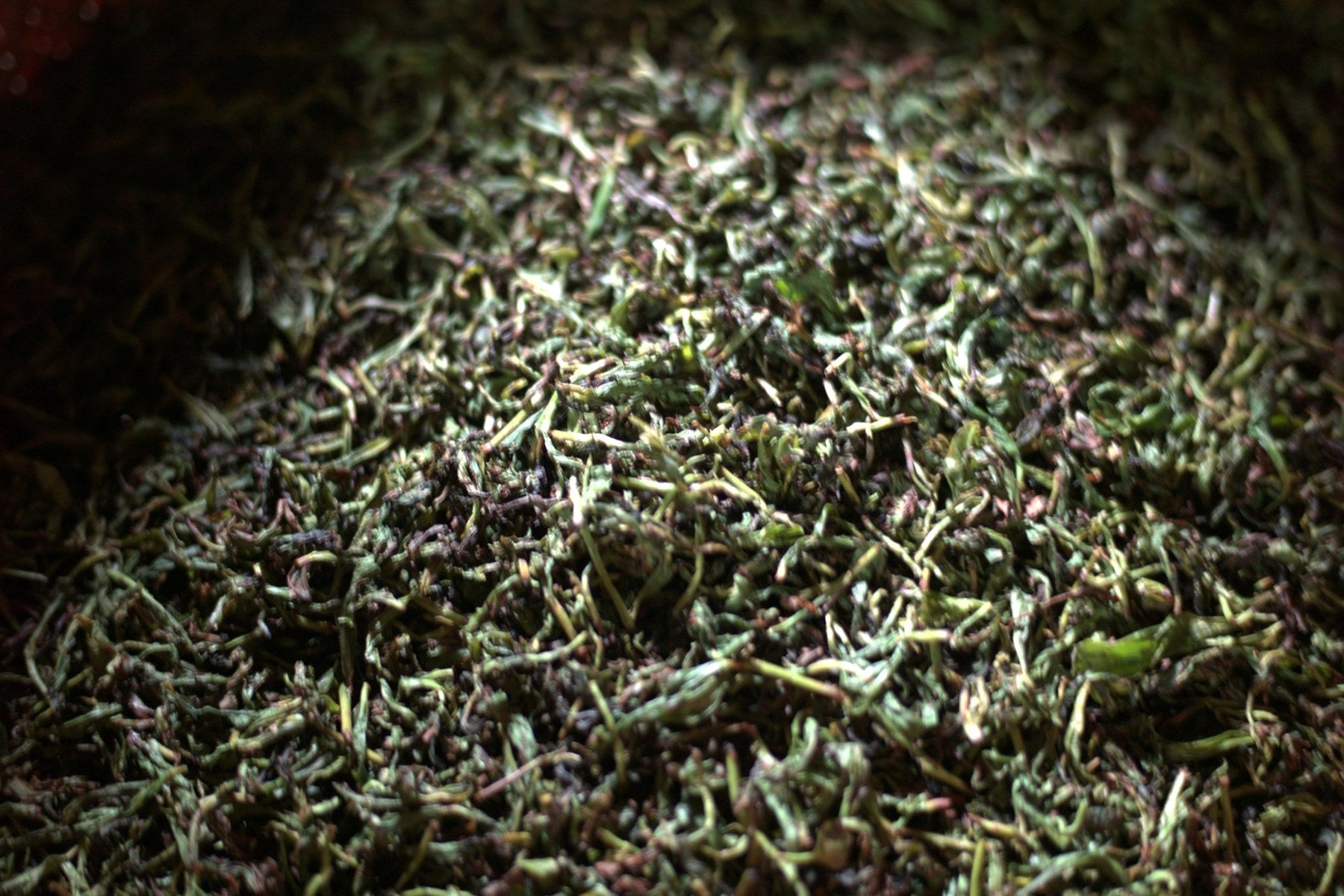
The warm leaf is rolled by hand, again and again, until it tightens into shape and its juices coat the surface. This is why a well-made tea releases its flavour quickly and evenly in the cup — the rolling has already done the first work of release.
06
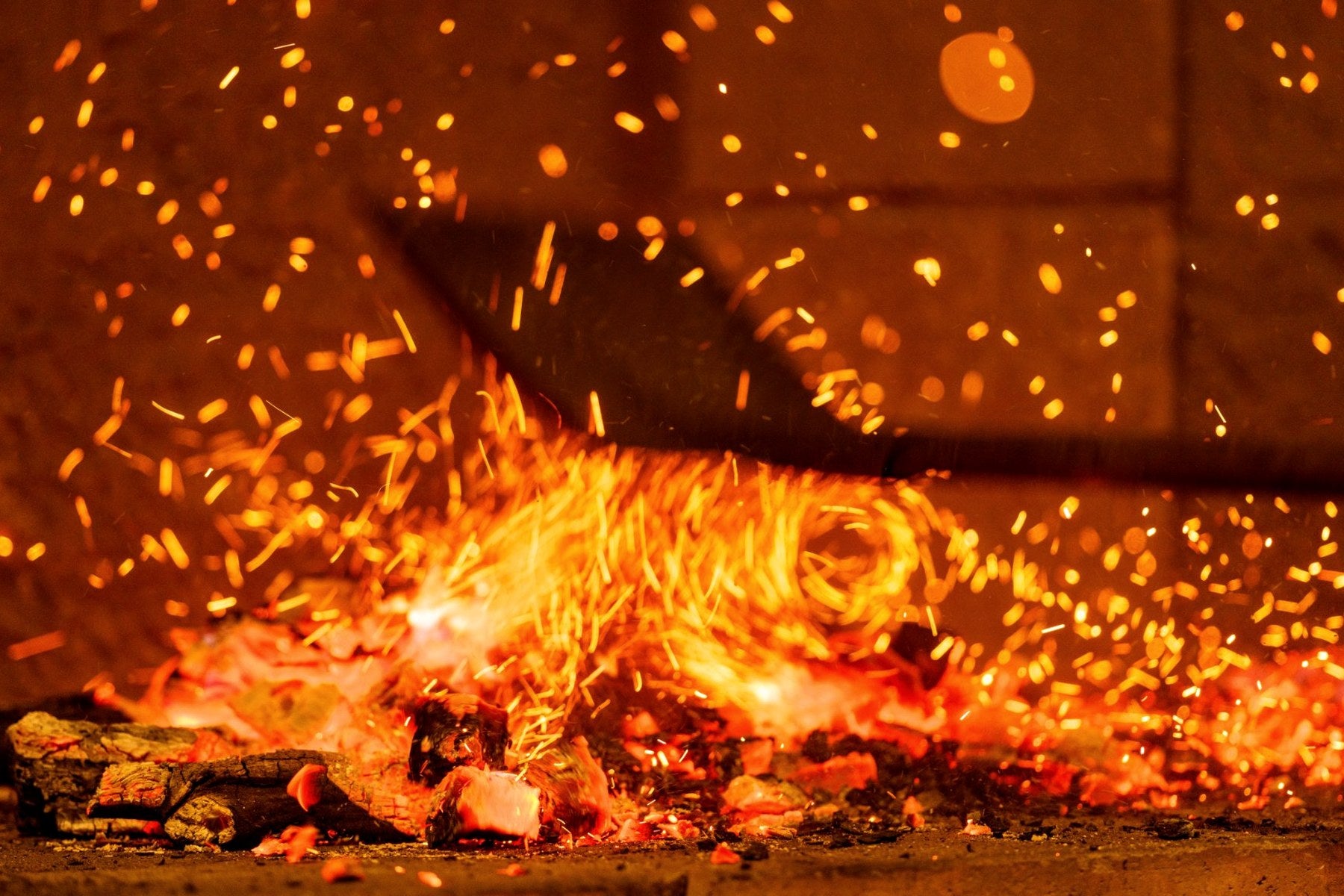
Charcoal Roasting
Heat held under ash, judged by hand and nose.

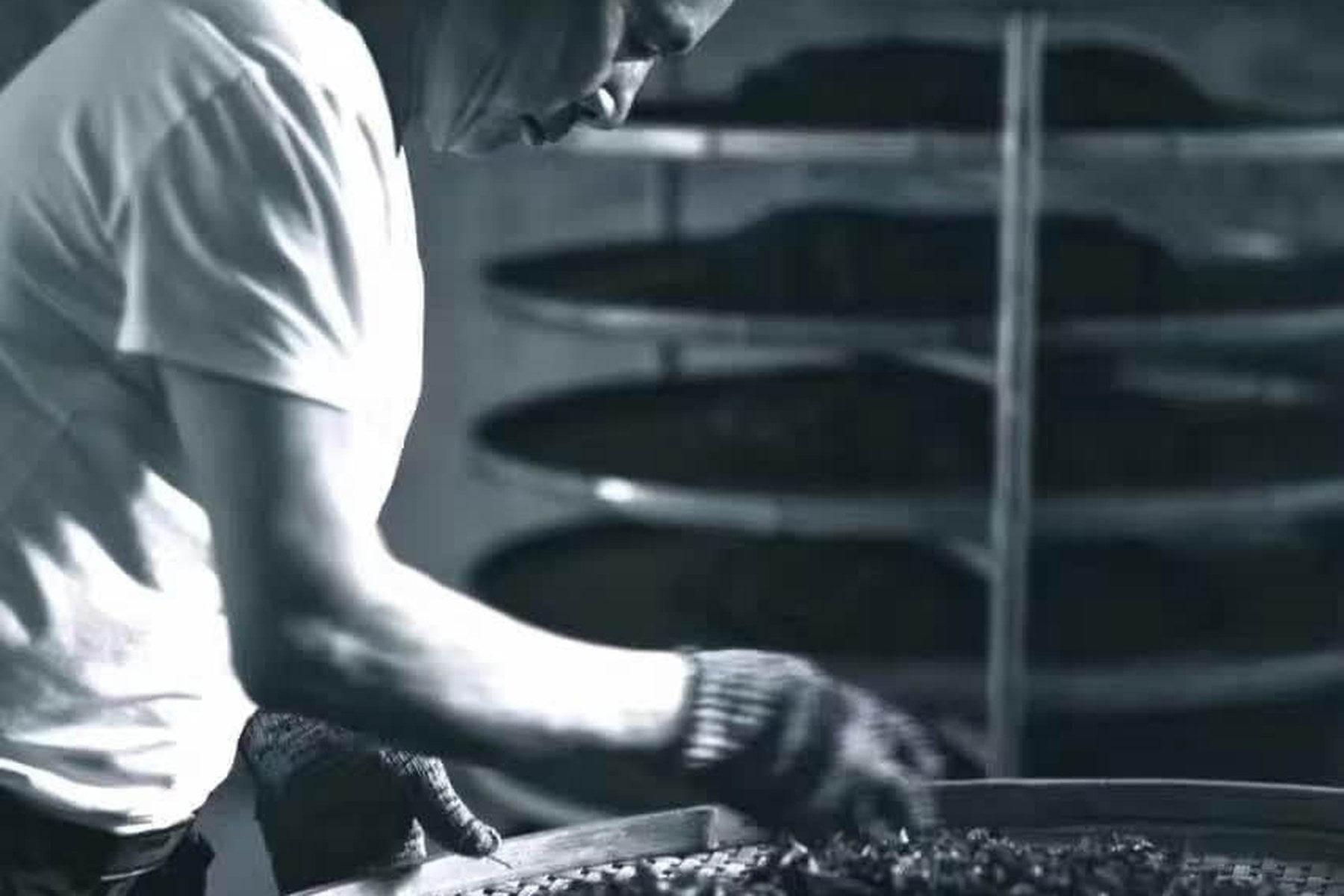
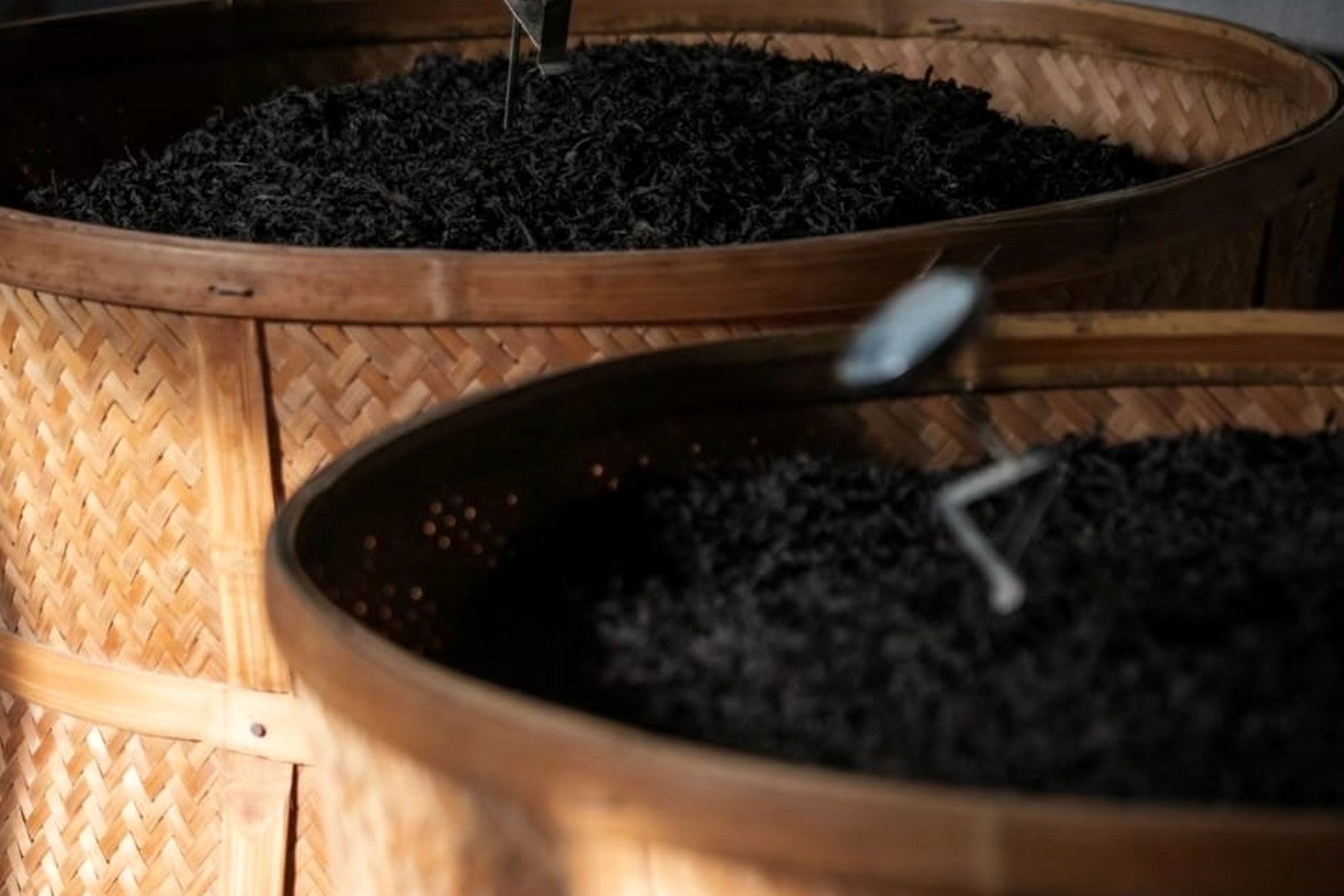
The rock teas are roasted over charcoal, in baskets, in repeated sessions across the season. The charcoal never flares: it glows beneath a blanket of its own ash, and the maker controls the heat by working that ash — spread thicker to cool the fire, opened up to let it breathe hotter. No flame and no smoke reach the leaf, only slow, even warmth, judged by hand and by nose, never by timer alone. Roasting trades the leaf's raw green edges for depth. The dark, mineral character Wuyi tea is known for is born in this fire.
07
Resting
The step no one sees — and the one that cannot be hurried.
A roasted tea is not finished when it leaves the fire. It rests — for weeks, sometimes months — while the fire fades and the mineral depth settles. Nothing is done to it in this time, and that is the point. Only when the roast has quieted is the tea ready.
A FAMILY LEGACY
We are 4th generation proud inheritors of the legacy of tea masters across generations in our family. Our teacher and inspiration is our father Wú Shui Wàng. Applying wisdom to his deep knowledge of tea, Shui Wang oversees our tea making and training the next generation of tea crafters.
In the time honoured tradition, our artisans craft the tea by hand that ensures quality. We use only natural materials from woven bamboo trays for air drying with fresh mountain air to wood charcoal for fire-roasting. Though making tea by hand is time-consuming and labor-intensive, the result is a richer, cleaner and deeply satisfying tea.